How it works

A camera feed is only the beginning.

AEyeTech turns selected streams into structured events, searchable evidence, and routed operational actions.
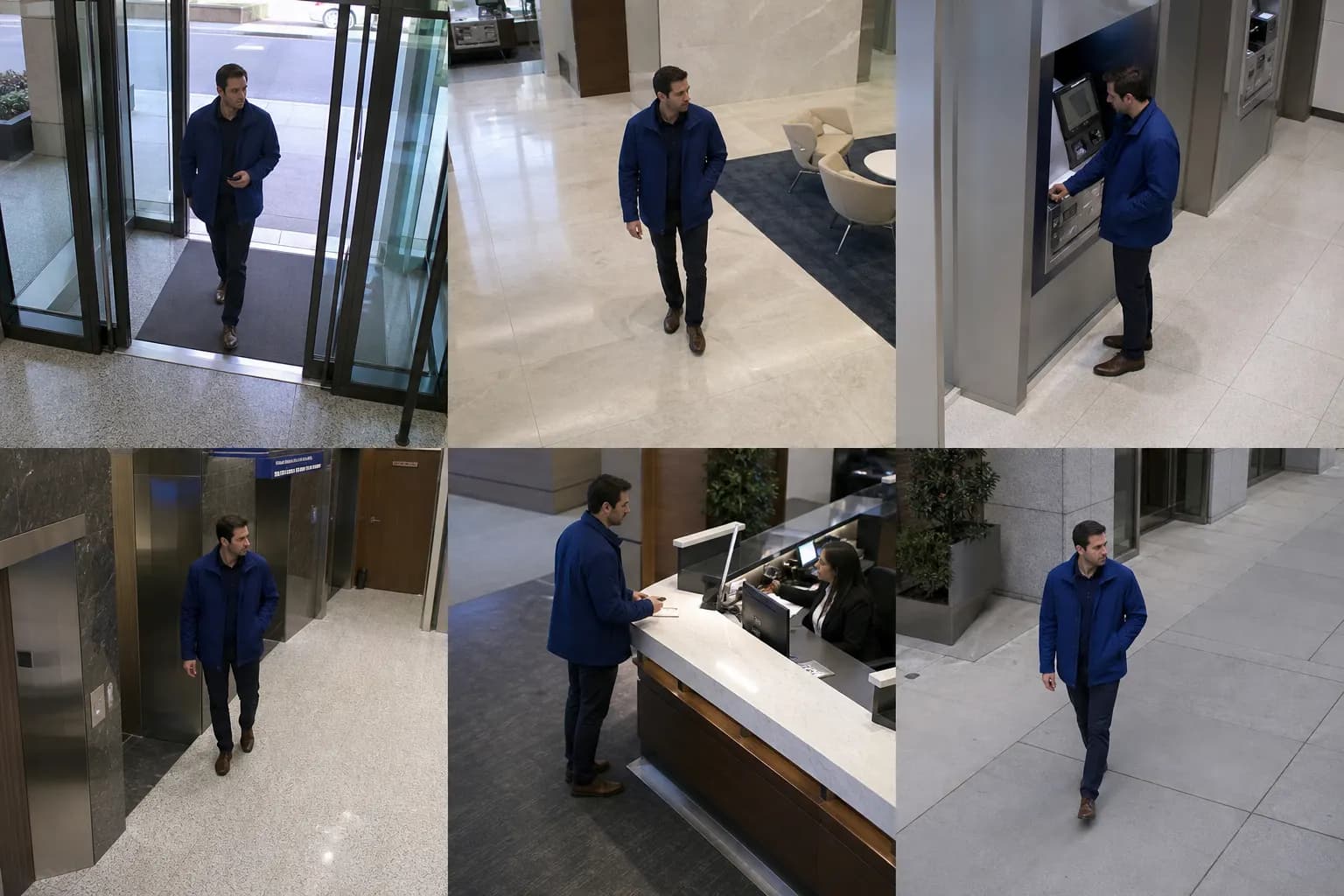
Person in a blue jacket moving through a monitored branch
AI layer activeHow it works

The intelligence loop

From signal to useful action.

The exact models and integrations vary by workflow, but the operating sequence stays understandable.
  1. Ingest

    Receive selected live or recorded streams from compatible sources.
  2. Interpret

    Detect, classify, track, or describe the configured visual signals.
  3. Structure

    Attach time, location, camera, and event context to the result.
  4. Search or verify

    Query indexed footage or verify whether an event deserves attention.
  5. Route

    Send the evidence to the operator, system, or workflow responsible for the next step.

Less raw footage. More usable context.

The value is not another screen; it is a clearer path from an event to a decision.
01

A time and place

Know which camera, site, and moment produced the signal.

02

A reason to look

Use configured event logic or a natural-language query to narrow the review.

03

Evidence to share

Keep the relevant clip, frame, event context, and operator note together.

04

A next step

Route a configured alert or workflow to the team that owns the response.

Designed for bounded proof

Measure the useful part, not the demo moment.

A proof of concept should test representative scenes, camera placement, event definitions, false positives, latency, and the operator workflow around the result.

That evidence gives the team a defensible decision about what to deploy, where to run it, and how it should be maintained.

See it in your environment

Bring one question to the cameras.

We will help define a measurable proof-of-concept workflow around it.