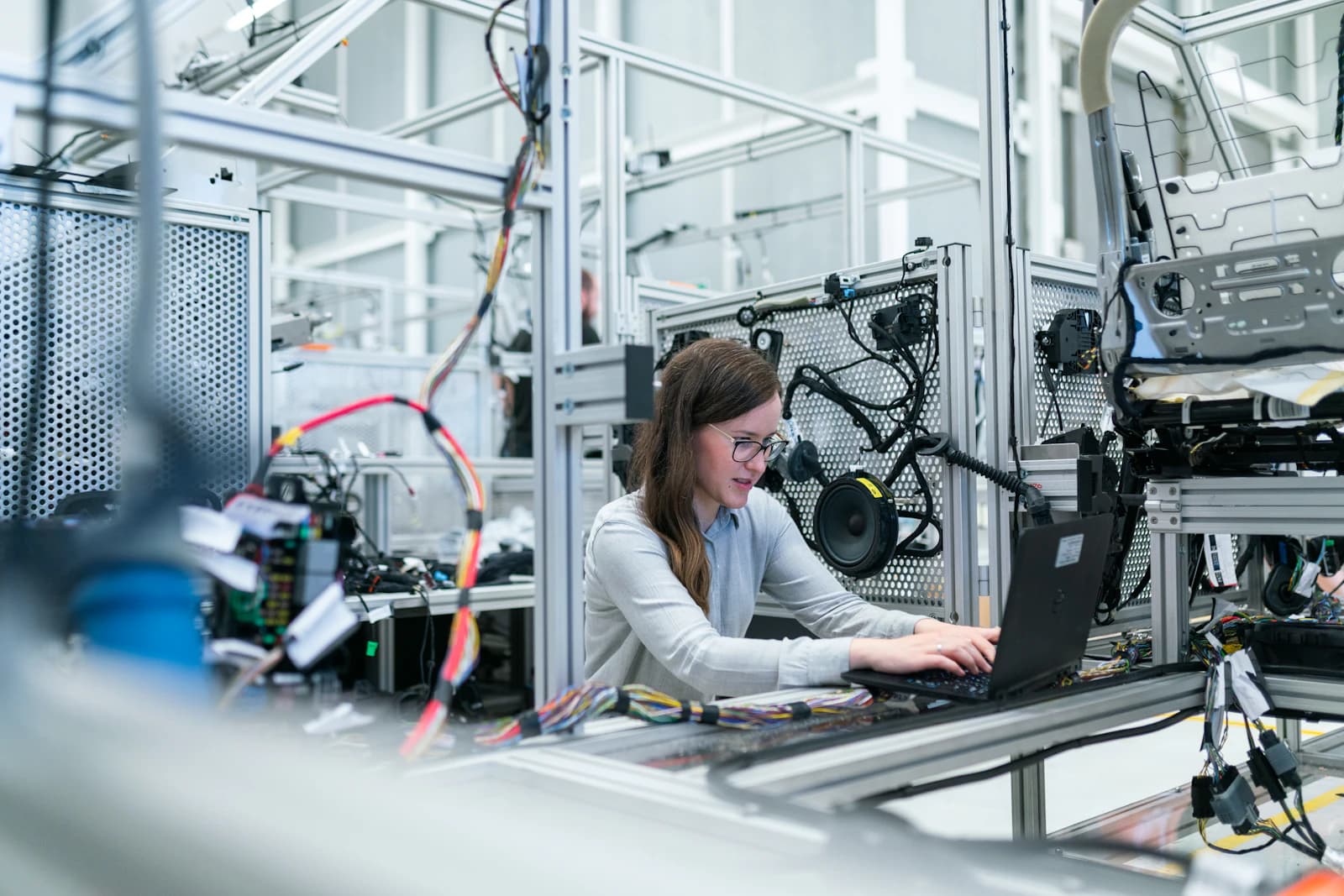
Industrial environments are inherently dangerous. Heavy machinery, hazardous chemicals, and high-pressure systems pose constant risks. Traditional safety measures rely on human vigilance, which is fallible.
The Cost of Accidents
Workplace incidents carry a serious human and operational cost. Many begin with a missed hazard, a momentary lapse, or a safety rule that is difficult to monitor consistently. This is where AI-assisted monitoring can help.
Continuous Monitoring Support
Computer vision can monitor defined zones continuously and route potential hazards to the right team. It supplements trained safety personnel and established controls; it does not replace them.
Core Safety Modules
- PPE Monitoring: A configured workflow can flag visible missing equipment for review and escalation. PPE remains one part of a wider safety program, as described in OSHA's PPE guidance.
- Visible Hazard Detection: Compatible visual or thermal sensors can help surface smoke, heat anomalies, or other observable conditions for investigation.
- Worker-down Alerts: A configured system can flag falls or unusual immobility and notify an authorized responder.
- Exclusion Zone Monitoring: Virtual zones can surface unsafe proximity between people and equipment. Any machine-control integration requires a separate safety engineering and validation process.
Example: Offshore Operations
On an offshore platform, visual monitoring can flag visible leaks, smoke, access violations, or missing protective equipment for human review. It complements certified safety and pressure systems. It does not replace them.
Fit the technology into the hierarchy of controls
Video analytics is an administrative and monitoring aid, not a substitute for eliminating a hazard, engineering a safer process, guarding machinery, or providing suitable protective equipment. The strongest project starts with the existing risk assessment and identifies where an additional visual signal can help a trained person act sooner. That framing prevents a camera system from becoming a superficial replacement for more effective controls.
For PPE workflows, identifying a helmet in a sample image is insufficient. The team must define the zone, required equipment, exceptions, camera view, notification recipient, and response record. In a vehicle interaction zone, the relationship between a person, equipment, and a marked boundary may carry greater operational importance than any single object label.
What a site validation should measure
Industrial scenes vary across shifts, weather, dust, glare, occlusion, uniforms, and maintenance states. A representative trial should include these conditions and publish a clear denominator for every metric. Precision describes how many raised alerts were relevant; recall describes how many relevant events were detected. Neither number alone describes whether a workflow is useful.
- Coverage: identify blind spots and the minimum usable subject size in the image.
- Timeliness: measure end-to-end time from observation to the responsible person's notification.
- Alert burden: count false alerts per camera and shift. An aggregate percentage can hide the operating load.
- Failure behavior: surface camera, network, or processing outages instead of silently losing monitoring.
- Change control: repeat checks when layouts, PPE, cameras, or workflows change.
From alert to accountable response
An alert has value only when it reaches a defined role with enough context to assess it. Integrations may create a review item, notify a supervisor, or add evidence to an incident system. Automatic machinery control is a separate safety-engineering problem and should use certified mechanisms, independent risk analysis, and appropriate fail-safe design.
Architecture also affects resilience and governance. Review the edge and on-premise infrastructure options, then test one bounded workflow through a measured proof of concept before extending it across a facility.
Questions for safety, operations, and engineering teams
Which hazards are suitable for visual monitoring?
The condition must be observable in the available camera view and defined consistently enough to test. Visible PPE, entry into a marked zone, smoke-like appearance, a fallen person, or a blocked route may be candidates. Gas concentration, structural integrity, pressure, and many process hazards require dedicated certified sensors; a camera cannot infer what it cannot reliably observe.
Where should alerts go?
Send an alert to the role that can assess and act within the required time, not simply to a generic dashboard. Define coverage across shifts, escalation when an alert is unacknowledged, and what evidence a reviewer sees. If the response depends on radio, mobile, control-room, or incident-management systems, include those integrations in the end-to-end test.
How can privacy be limited?
Restrict collection to the safety purpose, mask areas outside the relevant zone, process locally where appropriate, and limit access to event evidence. Set retention based on the safety and investigation need. Inform affected workers about the purpose, operation, and governance of the system, and involve the appropriate workforce, legal, and privacy representatives.
What happens when conditions change?
Camera movement, new uniforms, seasonal light, scaffolding, vehicles, dust, and production changes can alter performance. System health should identify missing or degraded streams, while operational reviews should compare alert patterns with known changes. A material change calls for targeted revalidation rather than assuming the original test still applies.
A responsible rollout sequence
- Select one risk: choose a defined, observable condition connected to the site's risk assessment.
- Map the workflow: identify detection, review, response, documentation, and escalation responsibilities.
- Assess cameras: confirm views, coverage, image quality, privacy boundaries, and network readiness.
- Agree metrics: set acceptance criteria for missed events, false alerts, latency, uptime, and reviewer burden.
- Run representative tests: cover shifts and difficult conditions without creating unsafe test events.
- Review with users: gather feedback from the people who receive alerts and manage the hazard.
- Scale with controls: add sites only with monitoring, change management, training, and named owners.
Procurement should also distinguish a useful trial from a staged demonstration. Ask whether the cameras are representative, how ground truth was established, which exclusions apply, and whether results include every alert rather than a selected highlight reel. The answer should be documented before the system is described as production-ready.
What success looks like
Success is not the absence of all incidents, a claim no monitoring system can guarantee. Better indicators include dependable coverage of the chosen condition, manageable alert volume, faster review, clear escalation, documented uptime, and evidence that teams actually use the workflow. Those measures can support a decision to adjust, extend, or stop the deployment.
Evidence to keep for audit and improvement
A deployment record should connect the original hazard assessment to the chosen cameras, configurations, acceptance criteria, trial results, approvals, and training. After launch, keep appropriate records of system availability, configuration changes, reviewed alerts, confirmed issues, false alerts, missed-event reports, and corrective actions. Access to video evidence should remain restricted, and retention should follow the documented safety and privacy purpose.
Trend reviews can identify where the workflow needs attention. A sudden fall in alerts might reflect improvement, a moved camera, a disconnected stream, or a new blind spot; it should not automatically be celebrated. A rise may reflect a real operational change or an overly sensitive configuration. Combine system records with inspections, near-miss reporting, and worker feedback to interpret the pattern.
Before expanding to another facility, compare its hazards, layout, cameras, PPE, work practices, connectivity, languages, and emergency arrangements with the validated site. Reuse the method and governance, not an assumption that the same settings will work everywhere. Site-level acceptance protects the integrity of a multi-location safety program.
Regular tabletop exercises can verify that people understand the workflow without manufacturing a dangerous event. Use approved recordings or controlled scenarios to test notification, acknowledgement, escalation, evidence handling, and recovery from an unavailable camera or integration. Record the result, assign corrective actions, and repeat the exercise after material changes. This tests the operational system around the model. That system determines whether a technically correct observation becomes a timely, safe, and accountable response.
The Future is Proactive
AI-assisted monitoring can help teams identify selected risks earlier and document response patterns. Results depend on camera placement, site conditions, model validation, and integration with a mature safety management program.